TL;DR
Most household batteries leak potassium hydroxide, which is strongly alkaline and caustic rather than acidic, and it burns skin and eyes on contact. Wear gloves and eye protection, neutralize it with a mild acid such as diluted white vinegar, rinse thoroughly, and expect some permanent color loss where it sat. This is damage control, not stain removal.
What Is Actually Leaking?
Knowing which chemistry you are dealing with changes what neutralizes it.
Alkaline batteries -- the ordinary AA, AAA, C, D, and 9V cells in remotes, clocks, and toys -- leak potassium hydroxide. Despite everyone calling it battery acid, this is a strong alkali. It looks like a white or gray crusty powder around the terminals and a damp caustic residue where it has pooled.
Lead-acid batteries, in cars, mobility scooters, and backup power units, leak sulfuric acid. This is genuinely acidic and requires the opposite neutralizer.
Lithium-ion batteries in phones, laptops, and tools contain a flammable electrolyte and can be a fire risk. A swollen, hot, hissing, or smoking lithium battery is not a cleaning problem -- get people away from it and follow the manufacturer's safety guidance, since that is outside what any cleaning approach addresses.
The great majority of carpet incidents are ordinary alkaline cells in a forgotten remote or toy.
Safety First, Genuinely
Potassium hydroxide burns. It is worse for skin than a mild acid because it does not sting immediately, so people keep working with it on their hands.
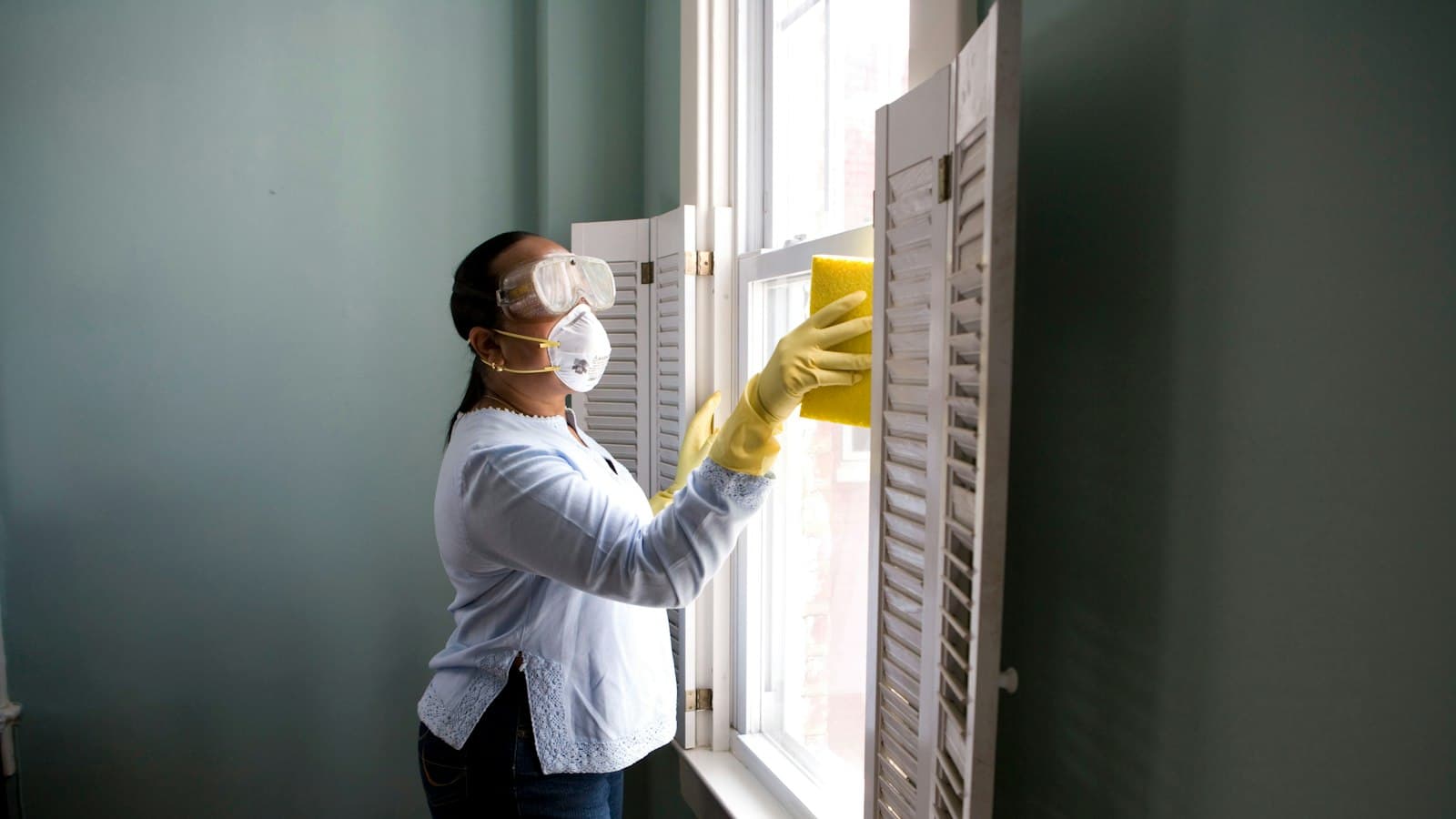
Wear chemical-resistant gloves. Not paper towels wrapped around fingers.
Wear eye protection. The powder flakes and becomes airborne easily.
Ventilate the room.
Keep children and pets out until the cleanup and rinse are finished.
Do not touch your face, and wash thoroughly afterward.
If any residue reaches skin or eyes, flush with plenty of running water and seek medical advice for anything beyond a trivial contact. That is a doctor's call, not a cleaning one.
Step One: Remove the Battery and the Solids
Pick up the battery with gloves and seal it in a plastic bag or a glass jar. Do not put it in household trash -- disposal routes are covered in how to dispose of alkaline batteries.
Scrape and lift the dry crust with a plastic spoon or a stiff card, working from the outside inward, and collect it on a paper towel rather than brushing it into the pile.
Vacuum the loose powder carefully with a shop vacuum, then dispose of the contents. Do not use your household vacuum if you can avoid it.
Do not add water yet. Wetting the crust before removing the solids spreads caustic residue through more fiber.
Source: IICRC S100 standard for professional carpet cleaning.
Step Two: Neutralize
For alkaline battery leakage, the neutralizer is a mild acid.
Mix a weak solution of white vinegar and water, roughly one part vinegar to three parts water. Vinegar is dilute acetic acid and is the standard household option.
Test in a hidden spot first, using the method in how to spot test carpet cleaner. This matters on any carpet and matters most on wool, which needs its pH kept roughly between 5 and 8 and does not tolerate rough handling.
Apply lightly to a white cloth and blot the area, working inward. Do not pour it on.
Expect some fizzing, which is the neutralization happening.
Repeat a few times with fresh cloth.
For a lead-acid spill, the chemistry reverses: a weak alkaline solution such as baking soda in water neutralizes sulfuric acid. Getting this backward makes things worse, which is why identifying the battery type first is not optional.
Step Three: Rinse Thoroughly
Neutralizing is not the end. Leftover salts from the reaction stay in the fiber and attract soil, and any unreacted caustic keeps working on the fiber and the backing.
Blot repeatedly with a cloth dampened in plain cool water, changing to clean sections constantly.
Extract with a wet-dry vacuum if you have one, which removes far more than blotting does.
Dry quickly with a fan on the area.
Check the pad. A generous leak can pass through the carpet into the pad, where the caustic residue keeps working out of sight. If the pad is wet and contaminated, replacing that section is the right call.
What to Expect Afterward
This is the honest part. Strong alkali does two things to carpet, and only one of them is reversible.
It strips dye. Expect a lightened, yellowed, or discolored area where the leak sat. That is dye loss, not a stain, and no cleaning product brings the color back.
It damages fiber. Prolonged contact weakens and can dissolve the yarn, leaving fiber that feels brittle, crumbles, or has partly disintegrated. Wool is especially vulnerable to alkali; nylon and polyester are more tolerant but not immune.
If the fiber is intact and only the color is gone, a technician can often spot dye the area, or the spot can be cut out and a matching piece set in. Those paths are compared in bleach spots on carpet options and a bonded carpet insert.
If the fiber itself is gone, a patch is the only route.
Preventing the Next One
Remove batteries from anything you are storing or will not use for months. Leakage happens in forgotten devices far more than in used ones.
Do not mix old and new cells, or different brands, in one device.
Do not store spare batteries loose in a drawer where terminals can bridge on metal objects.
Check remotes, smoke alarms, toys, and seasonal decorations once a year.
Keep devices with batteries off the carpet where you can, particularly anything stored under a bed or in a closet corner.
FAQ
Is household battery leakage acid?
No, despite the name. Ordinary alkaline AA, AAA, C, D, and 9V cells leak potassium hydroxide, which is strongly alkaline and caustic. Lead-acid batteries in vehicles do leak sulfuric acid. The two require opposite neutralizers, so identifying the battery type before treating the spill is essential.
How do I neutralize battery leakage on carpet?
For ordinary alkaline batteries, use a weak acid: roughly one part white vinegar to three parts water, applied to a cloth and blotted onto the area after the dry crust has been scraped and vacuumed away. For a lead-acid spill, use a weak baking soda solution instead.
Is battery leakage dangerous to touch?
Yes. Potassium hydroxide burns skin and eyes, and because it does not sting immediately people often keep working with it on their hands. Wear chemical-resistant gloves and eye protection, ventilate the room, and flush any skin or eye contact with plenty of running water.
Will a leaking battery permanently stain carpet?
It usually leaves a permanent mark, but as color loss rather than a stain. Strong alkali strips dye out of the fiber and can weaken the yarn itself. Cleaning removes the residue and stops further damage; it does not restore color, and severely damaged fiber has to be patched.
Can a bleached spot from a battery be repaired?
If the fiber is intact and only the color is gone, a technician can often spot dye the area to match, which works well on nylon. If the fiber has been weakened or dissolved, the area has to be cut out and replaced with a bonded insert from a matching remnant.
What should I do with the leaking battery?
Handle it with gloves, seal it in a plastic bag or glass jar, and take it to a household hazardous waste collection point or a retailer that accepts batteries. Do not put leaking batteries in household trash, and keep them away from other metal objects while stored.
See also: carpet cleaning. Enter your ZIP in the price box to see which services are available at your address.
Battery leakage is one of the few carpet spills where personal safety genuinely comes before the carpet, and where a permanent mark is the realistic expectation. Every home is different, so get a quote and we will walk you through it.