TL;DR
Oil based and alkyd enamel paint never becomes water soluble, so water is the wrong first move at every stage. Blot the wet paint, then use mineral spirits applied to a towel, working small and testing first, because the same solvent that dissolves paint can also soften the latex adhesive in the carpet backing. Work fast: oil paint stays workable for a few hours, then cures hard.
How Is Oil Paint Different From Latex?
Latex paint dries by evaporation and forms a film. Oil based paint cures by oxidation, meaning it chemically reacts with air and hardens into a tough resin. That process takes hours to begin and days to complete.
The practical difference is your window. You have longer than you would with latex, but the end state is harder. Cured alkyd enamel is tougher than cured latex and less responsive to softeners.
It is also never water soluble, not even for a second. That means every water based cleaner you own is the wrong tool for this spill from the moment it lands.
Why Does Water Make Oil Paint Worse?
Water cannot dissolve the paint, so it just floats it. A wet rag pushes pigment sideways and turns a small spot into a large halo, and it drives oily pigment into the base of the yarn.
Worse, adding water first creates an emulsion at the surface that makes the solvent step less effective later. The solvent now has to get through moisture to reach the paint.
This is the classic case of solvent spotter versus a water based spotter. Oily soils need solvent. Water based soils need water. Reversing the order costs you the stain.
Step One: Lift the Bulk Without Spreading
Scoop the wet paint straight up with a spoon or a putty knife held nearly flat. Work outside in so you never widen the edge.
Do not wipe. Do not press a paper towel down flat and drag. Both actions push paint deeper and wider.
Blot the remaining film with a dry white towel, changing to a clean section every time the towel picks up color. Getting eighty percent out dry means far less solvent later.
Step Two: Mineral Spirits, Applied to the Towel
Mineral spirits, sometimes labeled white spirit or paint thinner, is the standard solvent for alkyd paint. A dedicated carpet dry solvent spotter is gentler and is the better choice if you have one.
Apply it to a white towel and press. Never pour solvent onto the carpet. Poured solvent runs down to the primary backing, where it can soften the latex adhesive that holds the backing layers together and cause carpet delamination that no cleaning fixes.
Press for twenty seconds, blot, move to a clean towel section, and repeat. You should see paint transferring. If nothing transfers after four passes, the paint has cured and this method is finished.
Spot test in a hidden area first. Solvents strip dye from some carpets and destroy acetate, triacetate, and modacrylic fibers on contact.
What Are the Real Safety Rules Here?
Mineral spirits are flammable. Open windows, run a fan, and turn off any nearby pilot light, water heater, or space heater before you start. Do not smoke in the room.
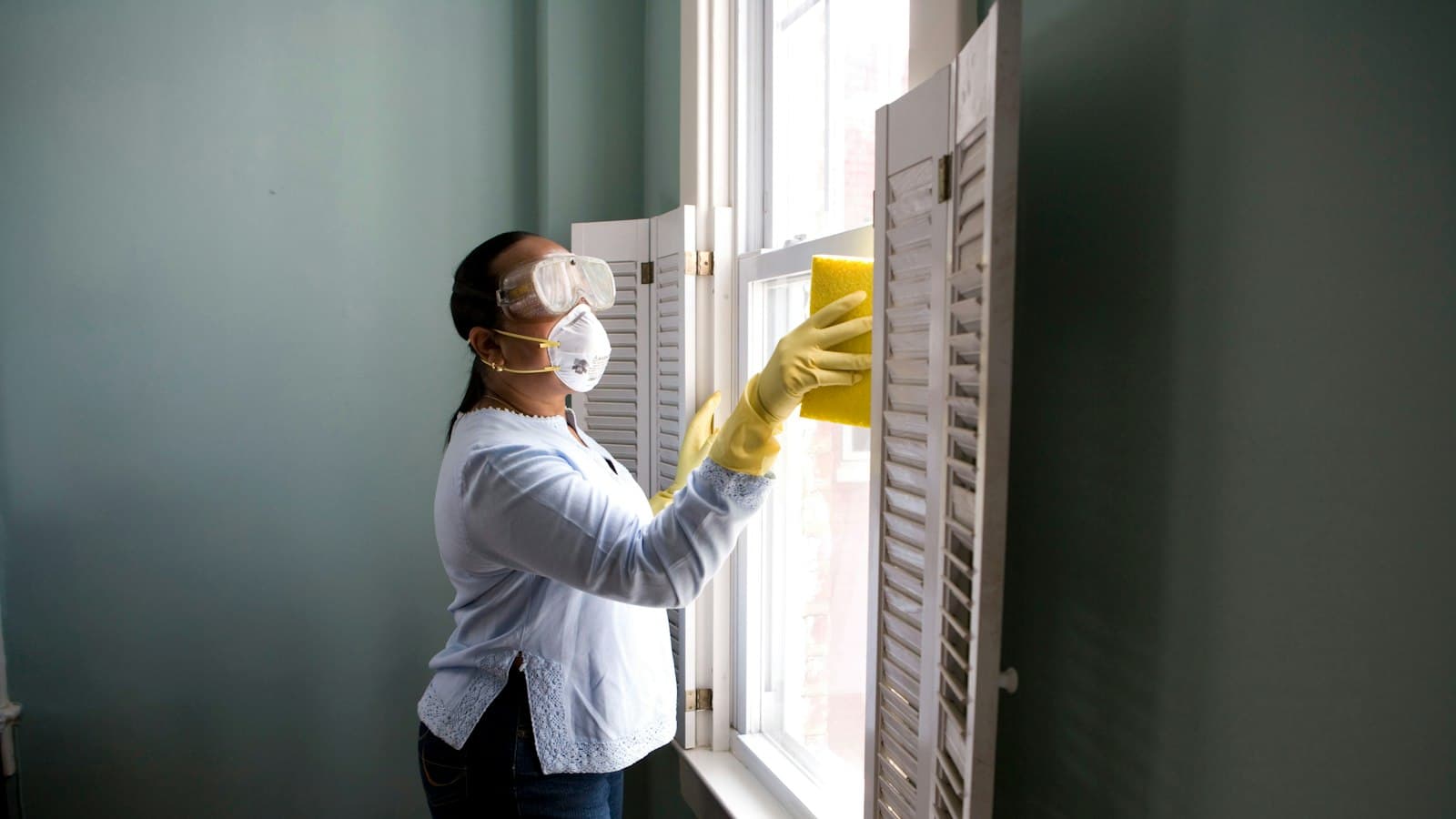
Wear gloves. Repeated skin contact with petroleum solvents causes irritation and dermatitis.
Do not mix solvents with anything else. Never combine any cleaning product with chlorine bleach, and never mix bleach with ammonia or acid. Keep solvent rags spread out to dry rather than balled up in a trash can, because oil soaked rags can generate heat as they cure.
And do not apply heat. No hair dryer, no iron, no steam. Heat plus solvent vapor is a hazard, and heat accelerates the paint curing you are racing against.
Step Three: Detergent and a Full Rinse
Solvent evaporates but leaves an oily residue behind, and residue is what turns a clean spot gray a month later. Once the paint is out, blot with a few drops of clear dish soap in warm water.
Let the detergent dwell two minutes, then blot it out and rinse the residue out with three passes of plain warm water. Extract with a wet vacuum if you have one.
Dry with a fan aimed across the surface for several hours. This is the step that prevents an outline appearing as the pile dries.
When Should You Stop Trying?
Stop when the paint has cured hard, when the spill is larger than your palm, or when solvent has stopped transferring color to the towel. Cured alkyd enamel bonded to fiber is not coming out with home chemistry, and escalating to a stronger solvent risks the backing and the dye.
At that point a bonded insert repair is the reliable answer. An installer cuts the section out and drops in matching carpet, usually from a closet or a leftover remnant.
Also stop immediately if the carpet starts to feel loose or spongy underfoot near the spot. That is delamination, and adding more solvent makes it permanent.
FAQ
Can I use acetone on oil based paint in carpet?
It is a poor choice. Acetone attacks the paint but also melts acetate, triacetate, and modacrylic fibers on contact and dissolves carpet backing adhesive faster than mineral spirits does. Mineral spirits or a dedicated dry solvent carpet spotter give you the same effect with much less risk.
How long do I have before oil paint cures on carpet?
A few hours of easy working time, and roughly a day before it is hard to the touch. Full cure takes several days. Unlike latex it does not skin over in minutes, but the harder it gets, the less solvent helps, so treat it the same day.
Will mineral spirits damage my carpet?
It can if you pour it. Applied to a towel and used in small amounts on synthetic carpet, it is generally safe. Poured directly, it reaches the latex backing adhesive and can cause delamination. It also strips dye from some carpets, so a hidden area test is not optional.
Do I still need to wash the area after using solvent?
Yes. Solvent leaves an oily film that acts as a soil magnet, so a spot that looks clean today turns gray in weeks. Follow with a mild detergent, then at least three plain water rinses, then dry with a fan.
What about oil based paint on wool carpet?
Solvent is generally safe on wool, but the risks compound. Wool cannot take high heat or high alkalinity, and wool dyes can be sensitive. Blot the bulk out dry, test carefully in a hidden spot, and consider handing the job to a wool trained cleaner before you escalate.
Is a professional cleaner able to remove cured oil paint?
Sometimes, on small spots, using controlled solvents and extraction that home methods cannot match. Large or fully cured spills usually end in a patch even for a professional. A good technician will tell you which situation you have before charging you to try.
Oil based paint is a solvent problem from the first second, and treating it like a normal spill is what turns a spot into a patch job. If you are unsure about your fiber or the spill is bigger than a hand, our carpet cleaning service can assess it before anything gets applied. Every carpet is different, so the real answer depends on fiber, backing, and how long the paint has cured. Get a quote and we will walk you through it.