TL;DR
Carpet cleaning reduces virus levels mainly by removing contaminated material, not by killing virus particles. Norovirus is the hardest case, because it is unusually resistant to many common cleaning products and can persist on soft surfaces for days or longer. Prompt removal of the contamination and fast drying matter more than any product claim.
Does Carpet Cleaning Kill Viruses?
Hot water extraction inactivates some virus particles through heat, detergent, and dilution, but the primary mechanism is removal. Extraction flushes the contaminated soil, vomit residue, or bodily fluid out of the pile and into a recovery tank that leaves your house. Fewer particles remain because they were carried away, not because they were killed.
That is a meaningful reduction, and it is the honest description of what happens. It is not disinfection, and carpet is a difficult surface to disinfect at all.
Why Carpet Is Hard to Disinfect
Disinfectant products are registered and tested for hard, non-porous surfaces. Carpet is the opposite: porous, absorbent, and high in surface area, with fiber, backing, and a pad underneath. A product that cannot maintain wet contact for its required dwell time across all that structure is not doing what its label describes.
Public health guidance draws a clear line between cleaning, sanitizing, and disinfecting. Cleaning removes soil and much of what rides on it. Sanitizing and disinfecting are verified reductions on specific surfaces with specific products. Source: CDC and EPA cleaning and disinfection guidance
For soft surfaces, most guidance defaults to laundering when possible and thorough cleaning when it is not. Carpet falls into the second category.
How Long Do Viruses Survive on Carpet?
It varies a lot by virus and by conditions. Influenza virus generally survives longer on hard surfaces than on porous ones, and often only hours on fabric. Norovirus is the outlier and can remain infectious on surfaces including carpet for days and, in some studies, considerably longer.
Moisture, temperature, and the presence of organic material all extend survival. A wet, soiled carpet is a friendlier environment than a dry, clean one, which is one more reason drying speed is part of the answer.
Norovirus Is the Hard Case
Norovirus spreads easily, takes very few particles to cause infection, and resists many common cleaning products that handle other organisms without difficulty. Vomiting also aerosolizes particles, so contamination extends well beyond the visible spot on the floor.
The practical response is scope and speed. Treat an area considerably larger than the visible mess. Ventilate the room. Keep other people out while you work. Bulk removal comes before anything liquid touches the floor, because flooding the area first only spreads the contamination outward and drives it deeper.
The step-by-step sequence lives in how to disinfect carpet after a stomach bug, which handles the ordering more carefully than a general article can.
Do This Immediately, Not Next Month
The single most useful factor is time. Contamination that sits for days works into the backing and the pad, where nothing you do at the surface reaches it.
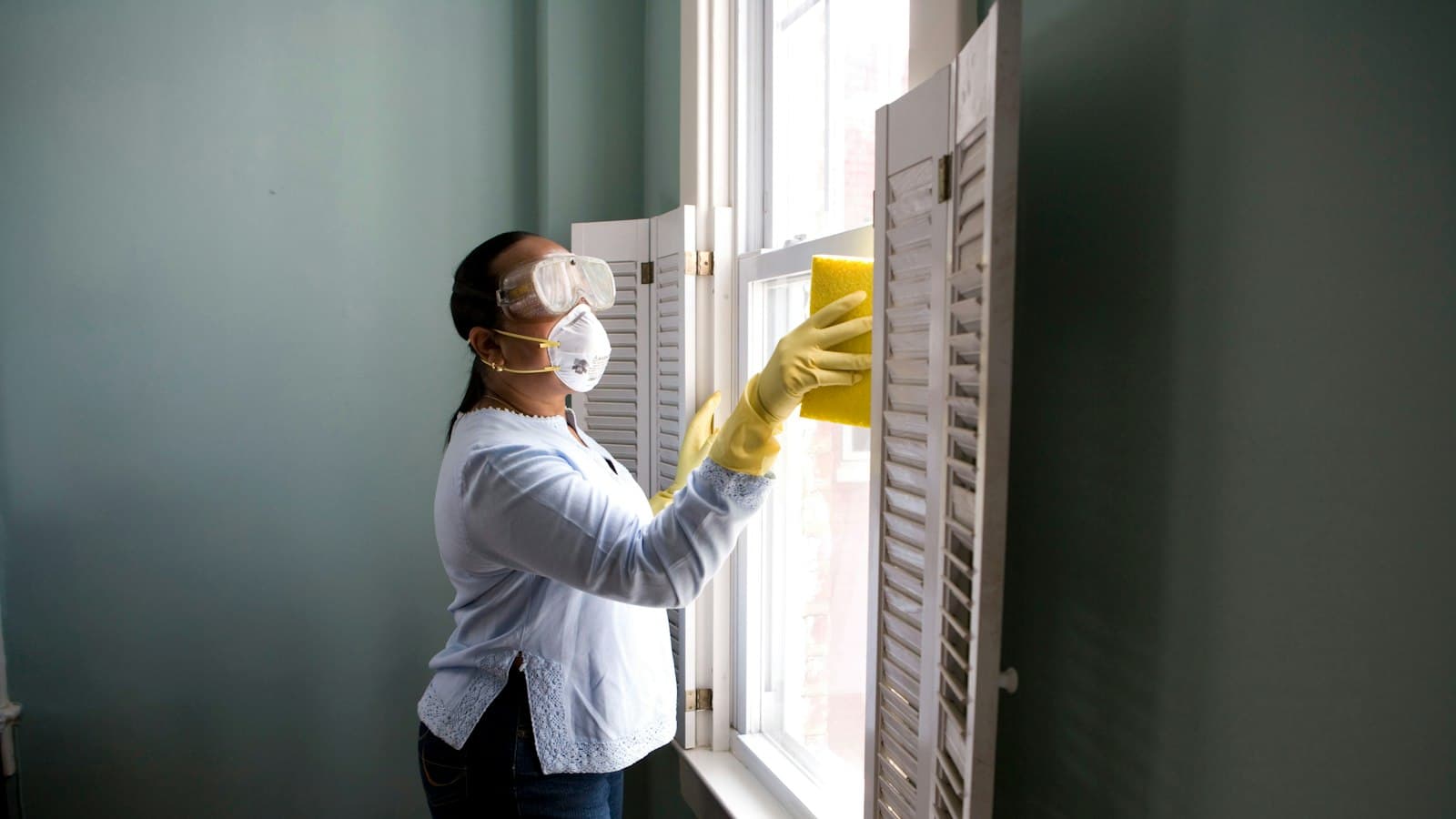
Wear disposable gloves and, if you have them, eye protection and a mask. Scrape and lift the bulk material with a stiff card, working from the outside of the spot inward so you do not enlarge it. Bag that waste immediately along with the gloves.
Then blot with clean white towels. Blotting matters here more than usual, because rubbing drives material down into the base of the pile. How to blot carpet instead of rubbing explains the technique.
Extract with clean water afterward, several passes, then dry the area aggressively.
Never Improvise Chemistry
Bleach is the reflex answer for norovirus, and it is genuinely effective on hard surfaces. On carpet it strips dye, leaving a permanent light patch that no cleaning corrects, and it cannot maintain the wet contact time it needs across a porous pile.
The safety rule is absolute regardless of surface. Never mix bleach with ammonia, with vinegar or another acid, or with alcohol. Those combinations release toxic gas. This matters concretely in a household cleanup, because urine is ammoniated and many household cleaners are acidic, so a bleach bottle in a room where a pet or a child has had an accident is a real hazard.
If you want to sanitize, put that effort into the hard surfaces around the carpet. Toilets, door handles, light switches, faucets, and bathroom floors are where registered disinfectants actually perform as labeled.
Drying Is Part of the Job
A carpet left damp after a contamination cleanup gives you two problems instead of one. Most viruses decline faster on a dry surface, and dampness lasting beyond roughly 24 to 48 hours opens a mildew and mold window in the pad and backing.
Set up airflow across the surface rather than pointed down into it, open the room up, and run a dehumidifier if the outdoor air is humid. Typical hot water extraction dries in 6 to 12 hours with reasonable airflow. See how to speed up carpet drying time for the practical setup.
When to Call a Professional
Call someone when the contamination is extensive, when it soaked through to the pad, when a shared space is involved, or when the household includes someone immunocompromised. Truck-mounted extraction recovers far more water than a rental unit, and a professional can advise on whether the pad needs to come up.
Also call if the smell persists after the carpet is fully dry. That usually means material reached the pad or the subfloor, and surface work will not fix it.
Any question about someone's health, exposure, or symptoms goes to a doctor. Cleaning a floor is not medical advice and does not prevent illness.
FAQ
Does hot water extraction kill norovirus?
Not reliably. Extraction water cools within seconds of hitting the pile, so it does not deliver sustained lethal heat, and norovirus resists many common cleaning agents. Extraction does remove a large share of contaminated material physically, which lowers the amount of virus left in the carpet.
How long does norovirus live in carpet?
Norovirus can remain infectious on surfaces, including soft surfaces like carpet, for days and in some conditions considerably longer. Moisture and organic soil extend survival. Prompt removal of contaminated material and thorough drying are the practical ways to shorten that window.
Can I use bleach on carpet after someone was sick?
No. Chlorine bleach strips dye from nylon and most carpet fibers, leaving permanent light spots, and it cannot hold the wet contact time it needs on a porous surface. Save bleach for hard surfaces, and never mix it with ammonia, acids, or alcohol.
Should I replace carpet after a norovirus incident?
Usually not. Prompt bulk removal, extraction, and fast drying handle most household incidents. Replacement becomes worth considering when contamination soaked through to the pad and subfloor, when odor persists after full drying, or when the carpet was already near the end of its life.
Does carpet cleaning prevent the flu from spreading?
No. Cleaning does not treat or prevent any illness. Respiratory viruses spread mainly person to person, and carpet is a minor route at most. Hand hygiene, ventilation, and staying home while sick do far more than any floor cleaning schedule.
Viruses on carpet are a removal-and-drying problem, and speed does more for you than any product claim. Handle the bulk material fast, extract with clean water, dry aggressively, and put your disinfectant effort on the hard surfaces where it works. For a serious incident or a contaminated pad, professional carpet cleaning services recover far more water than a rental will. Every situation is different, so get a quote and we will walk you through it.